
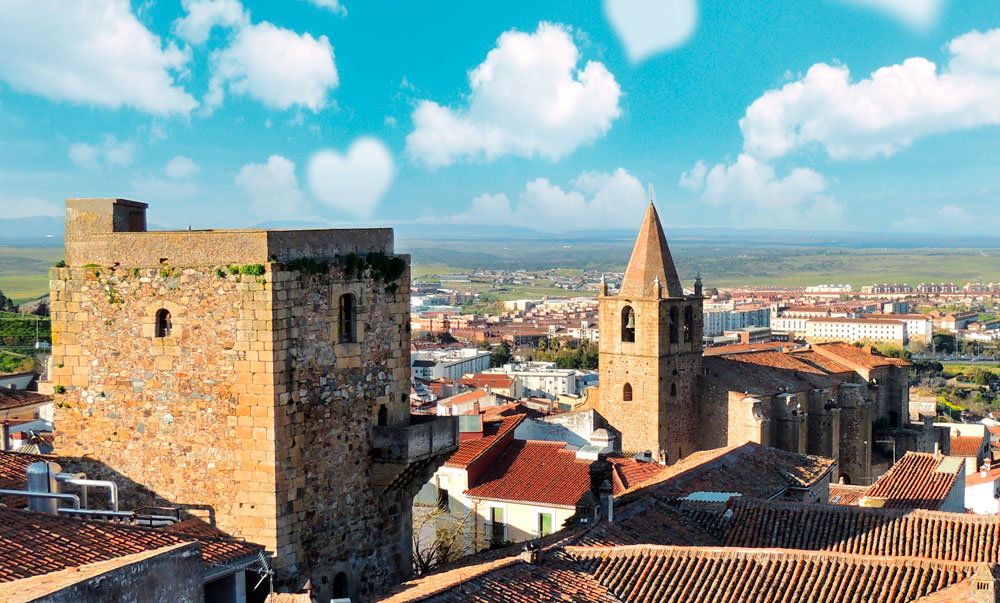
[vc_row rt_row_background_width=»fullwidth» rt_row_content_width=»default» rt_row_style=»default-style» rt_row_height=»» rt_row_borders=»» rt_row_shadows=»» rt_column_gaps=»» rt_row_paddings=»true» rt_bg_effect=»classic» rt_transparent_bg=»» rt_bg_image_repeat=»repeat» rt_bg_size=»cover» rt_bg_position=»right top» rt_bg_attachment=»scroll» rt_bg_video_format=»self-hosted»][vc_column rt_col_paddings=»true» rt_wrp_col_paddings=»false» rt_column_shadow=»» rt_border_top=»» rt_border_bottom=»» rt_border_left=»» rt_border_right=»» rt_border_top_mobile=»» rt_border_bottom_mobile=»» rt_border_left_mobile=»» rt_border_right_mobile=»» rt_bg_image_repeat=»repeat» rt_bg_size=»auto auto» rt_bg_position=»right top» rt_bg_attachment=»scroll»][vc_column_text]Cantamos la tragedia que tuvo lugar en habitaciones olvidadas e inaccesibles de la torre de los Cáceres Andrada, que llamaron nuestros abuelos de Espaderos para recordar la muerte hace siglos de dos jóvenes amantes, cuya pasión enloqueció al padre de ella, un noble señor de las armas ambicioso y arrogante en busca de una gloria que truncó el amor de su hija con un joven de inferior posición.
In those times, the town of Cáceres was divided into opposing factions, with the honour and courage of the nobles being highly prized currencies. Only the King's call to fight the Muslims brought them together, bringing moments of peace to streets often bathed in blood.
Of all the knights, the magnificent lord of the Cáceres Andrada stood out, an excellent mage, a master of the art of war, respected by friend and foe alike. His reputation for being skilful, tough and implacable reached the ears of Henry IV, who invited him, along with the best of his army, to fight in a tournament he had organised to measure the strength of his men. Feeding his insatiable ego and with the aim of winning the monarch's admiration, confident that he would emerge victorious from the event, the Cáceres native hired the services of a young and skilful swordsman, who had a reputation for being the best in his trade, and commissioned him to make the most beautiful and magnificent weapon with which to amaze the Court.
While waiting for the long-awaited day, he devoted his time, widower as he was, to his only daughter, a beautiful maiden with whom he intended to aggrandise his position by a profitable liaison. In order that his ambition should not be spoiled, he kept her away from the hustle and bustle of the time within the strong palace walls, wary of his companions in arms, for when they visited him, they did not hide their bright eyes from the progress in health and beauty of the young girl, who thus gained a just reputation as one of the most beautiful in Cáceres.
But love presented itself in the most unexpected and cruel way for such pretensions. The ungrateful cloister made it easy for the darts of passion to travel freely through the rooms of the palace, and one of them struck the heart of the young woman, who began to sigh for the swordsman, who, following the orders of the powerful lord, came every day to show her his progress with the weapon. Little by little, on the occasions that fleeting moments allowed, they exchanged ardent glances, their eyes shouting what their bodies had to silence in order not to arouse the father's wrath.
The great day of the jousting finally arrived, and the nobleman from Cáceres came to it in his best clothes and with his fabulous and shining sword, taking with him a large entourage in which his daughter stood out, and who also had the swordsman as his valet. During the tournament, the nobleman dazzled everyone, winning the king's appreciation. And along with her victories, the young maiden also won unanimous acclaim for her delicate beauty, and was entertained by many knights whose requests inspired the nobleman's desire to improve his lineage.
Enthused by the prosperous day, he agreed to the monarch's request to start a new operation against the Muslims. Eager to take action, he entrusted the maiden to the care of the swordsman on his return to Cáceres with the rest of his entourage, without even thinking that there was any danger in doing so, having placed his trust in the man whose good work had been one of the architects of his glory. Relieved on the way from the close paternal vigilance, at last beautiful words were exchanged between the young men, and, with no other care, they gave themselves up to the passion they felt.
But the romance, unbeknownst to them, which knows neither time nor place, was the cause of delays on the return journey. And what was infinite happiness turned into tragedy.
The father, having successfully ended the brief skirmish, returned to his home. Catching sight, from a distance, of the towers of the town of Caceres, he was surprised to overtake the retinue, which should have arrived some days before at its destination, but which, nevertheless, lay stranded and idle still several miles away. He surprised the lovers with words of love and of the future, and, in a rage, seized the swordsman and drove him to his palace, throwing him into the dungeons in the depths of the tower.
Maddened by the outrage, he subjected him to cruel torment, using all the torture practices he could think of to make him confess the extent of the seduction, to which he only got the same answer: his daughter's honour had been respected. In his madness, the master ignored and redoubled his efforts in his infamous dedication.
One day, the daughter, taking advantage of an oversight by the father and the servants who were helping him, was able to gain access to the cell where the young swordsman was dying. She embraced his mutilated body, crying and screaming at the horror and cruelty to which he had been subjected, but she had time to see how he smiled and exhaled his last joyful breath in the arms of his love. The pain was so intense, that in the embrace she too died of grief.
When they heard of the fatal outcome, there were knights who killed the proud and delirious father, and for the eternal memory of this story, they ordered the palace to be demolished, saving the tower, which still rises to the sky as a reminder that, in its entrails, the bodies of those who died for love lie eternally embraced.
José Luis Hinojal Santos
caceresensuspiedras.com
[/vc_column_text][/vc_column][/vc_row][/vc_column_text][/vc_column][/vc_row].